
Lithium Battery Price in Pakistan (2026): A Straight Answer, and What Moves the Number


If you are shopping for a battery this year, you have probably noticed two things already. Lithium costs more than the tubular battery your neighbour swears by, and no two shops seem to quote the same price. Both are true, and both make sense once you know what you are paying for. So let us keep it simple: here is what a lithium battery actually costs in Pakistan today, what makes one quote higher than another, and how to tell whether the price in front of you is fair.
One change this year has turned the battery from a nice extra into the real reason to go solar. In February 2026 the government moved rooftop solar from net metering to net billing. Put plainly, the surplus units you send back to the grid now pay you far less than before, around Rs 11 a unit instead of the mid twenties, while the electricity you buy back at night still costs the full rate. Selling your daytime solar cheap and buying it back expensive after sunset is a losing deal. A battery lets you hold on to your own power for the evening, and that is exactly why so many homes are asking about lithium right now.
So what does a lithium battery cost in Pakistan?
Batteries are priced on two things: how much energy they hold, measured in watt-hours (Wh) or kilowatt-hours (kWh), and the quality of the cells and electronics inside. As a rough guide in late 2026, a good lithium (LiFePO4) battery from a proper brand comes to about Rs 40,000 to Rs 55,000 for every usable kilowatt-hour. A small pack for lights, fans and a few hours of backup starts near Rs 50,000. A wall unit that runs most of a home sits in the low to mid hundreds of thousands. A big bank that carries a full house through the night costs more again.
Here is the simplest way to picture it, by what you want to run:
| What you want to back up | Rough size | Typical price in 2026 |
|---|---|---|
| Lights, fans, a few hours at night | 0.8 to 1 kWh | Rs 50,000 to Rs 60,000 |
| One room or a small shop | 1.5 to 2 kWh | Rs 90,000 to Rs 120,000 |
| Most of a home (wall unit) | 5 kWh | Rs 1.8 to Rs 2.5 lakh |
| A full home through load shedding | 10 kWh and up | Rs 4.5 lakh and up |
Treat these as starting points. Prices move with the dollar, the brand, the cell grade and the warranty. For exact figures, the current NOVA prices are further down.
Why is lithium dearer than a tubular battery?
On the shelf, a tubular or lead acid battery is cheaper, and that is where most people stop looking. The real difference shows up in how much of the battery you can actually use, and in how long it lasts you.
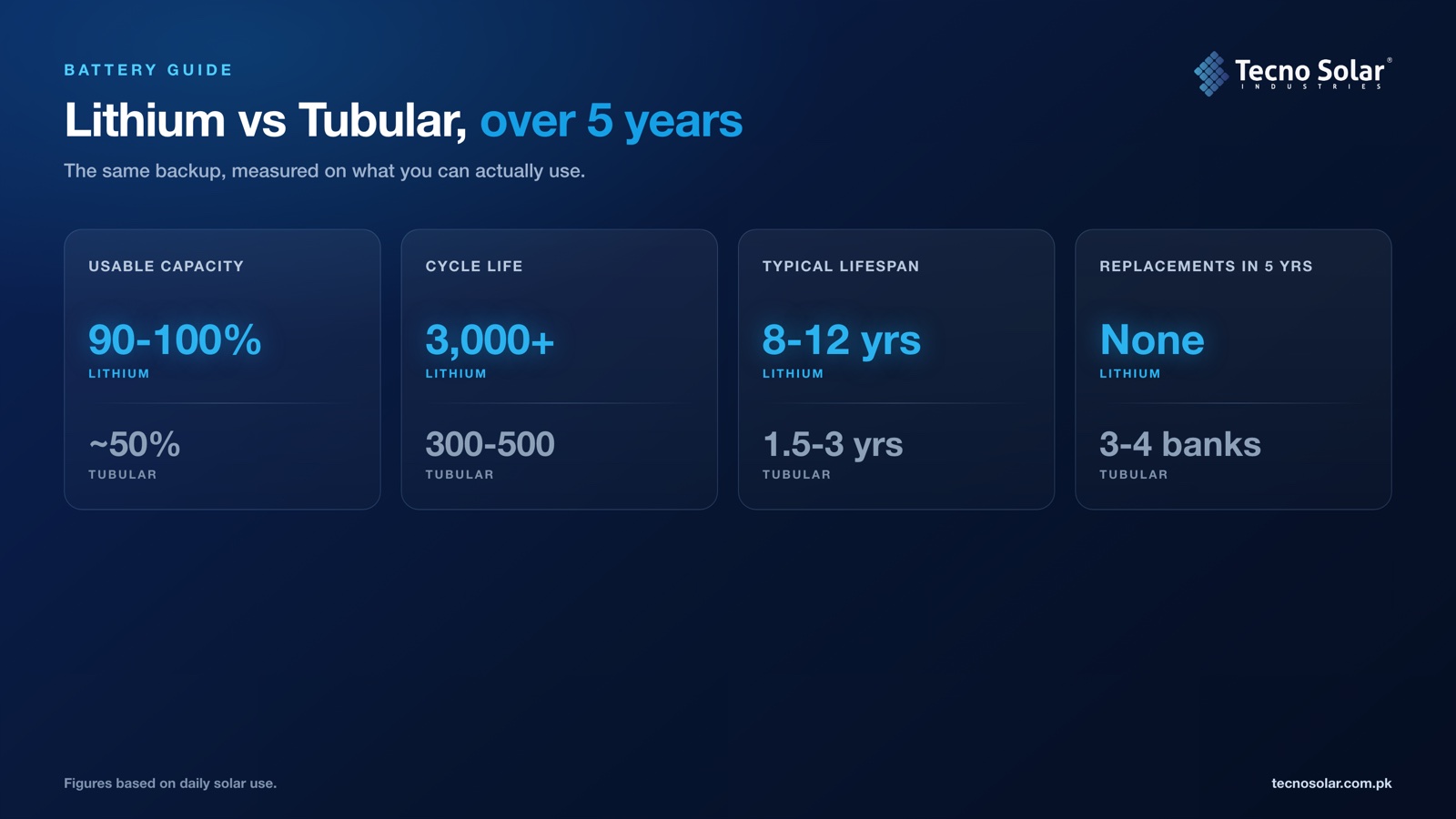
- Usable energy: A tubular battery gives you only about half of what it is rated for. Pull it below 50 percent too often and it wears out fast. A lithium battery lets you use almost all of it, 90 to 100 percent, so a smaller lithium pack does the same job.
- Lifespan: A tubular bank usually lasts 300 to 500 full charge cycles, which with daily solar use is roughly one and a half to three years before it starts fading. A good lithium battery is built for 3,000 cycles or more, often eight to twelve years of the same use.
Put the two together and the sticker price can fool you. In the time one lithium battery keeps working, you would normally replace a tubular bank three or four times. Measured against the real, usable backup you get over its life, lithium usually works out cheaper, not dearer.
What actually sets the price, so you can read a quote
When two quotes look far apart, the difference is almost always one of these:
- Usable capacity: The single biggest factor. More kWh costs more, and a battery that promises a big number but only lets you safely use half of it is not the bargain it looks like.
- Cell type: LiFePO4 is the safe, long life chemistry used in home storage today. Cheaper lead acid and tubular cost less now and more later. Unbranded lithium imports can hide weak cells.
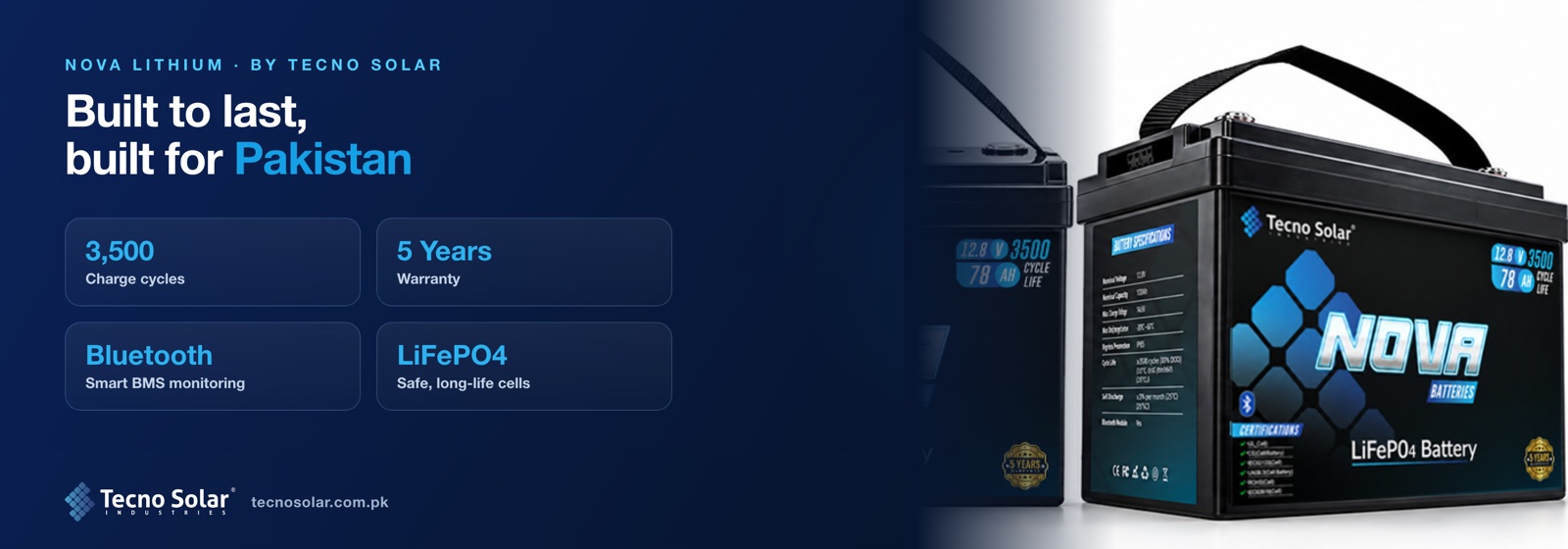
- The BMS: The battery management system protects the cells, keeps them balanced and shuts things down safely. A proper BMS, ideally with Bluetooth so you can check the battery on your phone, is part of what you are paying for.
- Cycle rating and warranty: A pack rated for more cycles and backed by a real, honoured warranty is worth more than a cheaper one with neither.
- Voltage and build: Small 12.8 volt packs suit light backup. Larger 51.2 volt wall and floor units are built to run a whole home with a hybrid solar inverter. You pay for the size and the build.
- Brand and after sales: A known brand with local support and stock costs a little more and saves you a lot if anything goes wrong. A cheap unknown unit can turn into an expensive paperweight.
How net billing changed the sums
This is worth understanding before you spend anything. Until February 2026, net metering paid you close to the retail rate for the extra solar you exported, so a battery was optional. You could treat the grid as your battery. Under the new net billing rules, that export is worth far less, while the units you pull back after dark still cost full price.
The short version: Exported solar now earns about Rs 11 a unit. The power you buy back at night costs the full tariff. A battery stores your own daytime solar so you use it at night instead of buying it back expensive. For most homes, that gap is where solar finally pays for itself.
So the battery is no longer a luxury add on. For a lot of households it is the piece that makes the whole solar system worth having, which is the real reason interest in lithium has jumped this year.
How much battery do you actually need?
A full answer deserves its own guide, and we will publish one soon. The quick version is to add up the watts of what you want to run at night, multiply by the hours you need them, and leave a little headroom. A few fans, lights and a TV for the evening is a very different number from running an air conditioner. Buy for what you actually use after sunset, not for the biggest number a salesman can fit on the quote. If you are not sure, send us your load and we will size it for you.
NOVA lithium battery prices in Pakistan (2026)
Tecno Solar builds the NOVA range of lithium batteries, from small 12.8 volt packs for light backup up to 51.2 volt units for a full home on a hybrid inverter. Every NOVA battery uses LiFePO4 cells, a JBD battery management system with Bluetooth, and comes with local support. Current prices:
| Model | System | Capacity | Price (2026) |
|---|---|---|---|
| NOVA 1 Lite | 12.8V | 67Ah / 0.86 kWh | Rs 50,000 |
| NOVA 1 | 12.8V | 78Ah / 1.0 kWh | Rs 55,000 |
| NOVA 1.2 | 12.8V | 100Ah / 1.28 kWh | Rs 65,000 |
| NOVA 2 | 12.8V | 150Ah / 1.92 kWh | Rs 100,000 |
| NOVA 2.5 Pro | 25.6V | 200Ah / 5.12 kWh | Rs 180,000 |
| NOVA 5 | 51.2V | 100Ah / 5.1 kWh | Rs 220,000 |
| NOVA 10 | 51.2V | 205Ah / 10.5 kWh | Rs 445,000 |
| NOVA 16 | 51.2V | 314Ah / 16.1 kWh | Rs 650,000 |
| NOVA 16 Pro | 51.2V | 314Ah / 16.1 kWh | Rs 660,000 |
The small 12.8 volt packs, NOVA 1 Lite, NOVA 1 and NOVA 2, suit light backup and small setups. The 51.2 volt units are for whole home systems on a hybrid inverter. Prices are current for 2026 and can change, so confirm when you order.
Frequently asked questions
Is a lithium battery worth it in Pakistan in 2026?
For most homes, yes. Since the move to net billing, storing your own solar is worth more than exporting it cheaply, and lithium lasts long enough that its cost per year usually comes in below a tubular battery you keep replacing.
How long does a lithium battery last?
A good LiFePO4 pack is rated for 3,000 charge cycles or more, which for normal daily solar use is roughly eight to twelve years. A tubular battery under the same use often lasts one and a half to three years.
Is lithium better than a tubular battery?
For solar storage, yes, on every measure except the price on day one. Lithium gives you far more usable capacity, many times the lifespan, and almost no maintenance. Tubular only wins on the upfront cost.
What size lithium battery do I need for my home?
It depends on what you run at night and for how long. Light backup for fans, lights and a TV needs far less than running an air conditioner. Add up your night time load in watts and the hours you need it, or send us the list and we will size it.
Will a lithium battery work with my existing solar inverter?
Usually, as long as your inverter supports the battery voltage and is lithium compatible. Most modern hybrid inverters are. Share your inverter model and we will confirm before you buy.
Should I buy a 12 volt or a 48 volt battery?
A 12.8 volt pack suits small, light backup. For a whole home running on a hybrid solar inverter, a 51.2 volt (48 volt) unit is the right fit. The inverter you already have usually decides this.
Thinking about a battery for your home or business? See the full NOVA lithium range and prices, or send us a message for a quote and we will size the right battery for your load.