
Net Metering vs Net Billing in Pakistan (2026): What Changed, and Why a Battery Now Makes Sense
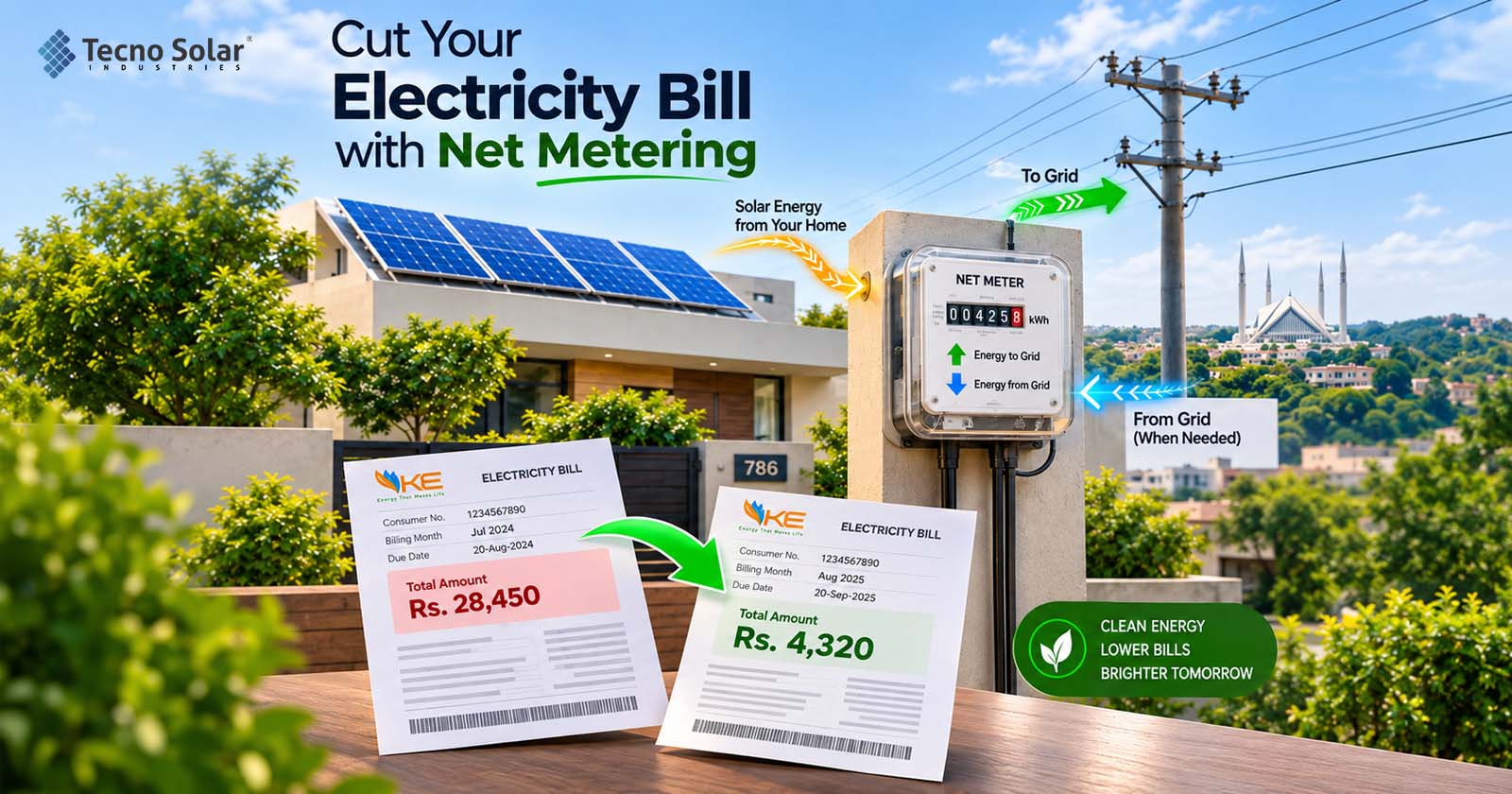
If you went solar in the last few years, the deal was simple. Your panels made more power than the house used during the day, you pushed the extra onto the grid, and the meter ran backwards. At night you pulled that credit back at the same rate. That arrangement was called net metering, and it is a big reason rooftop solar paid for itself so quickly in Pakistan.
In 2026 the rules changed. If you are deciding on solar this year, or you already have panels and keep hearing the words net billing, here is what actually happened, what it does to your savings, and why so many homes are now adding a battery instead of chasing a bigger export meter.
Net metering vs net billing, the difference in one minute
- Net metering: You export your surplus units and are credited at roughly the same retail rate you buy at. One for one. A good system could take the bill close to zero.
- Net billing: You still export, but you are paid a lower, fixed buy-back rate for what you send out, while you keep buying your night-time power at the full tariff. The two prices are no longer equal.
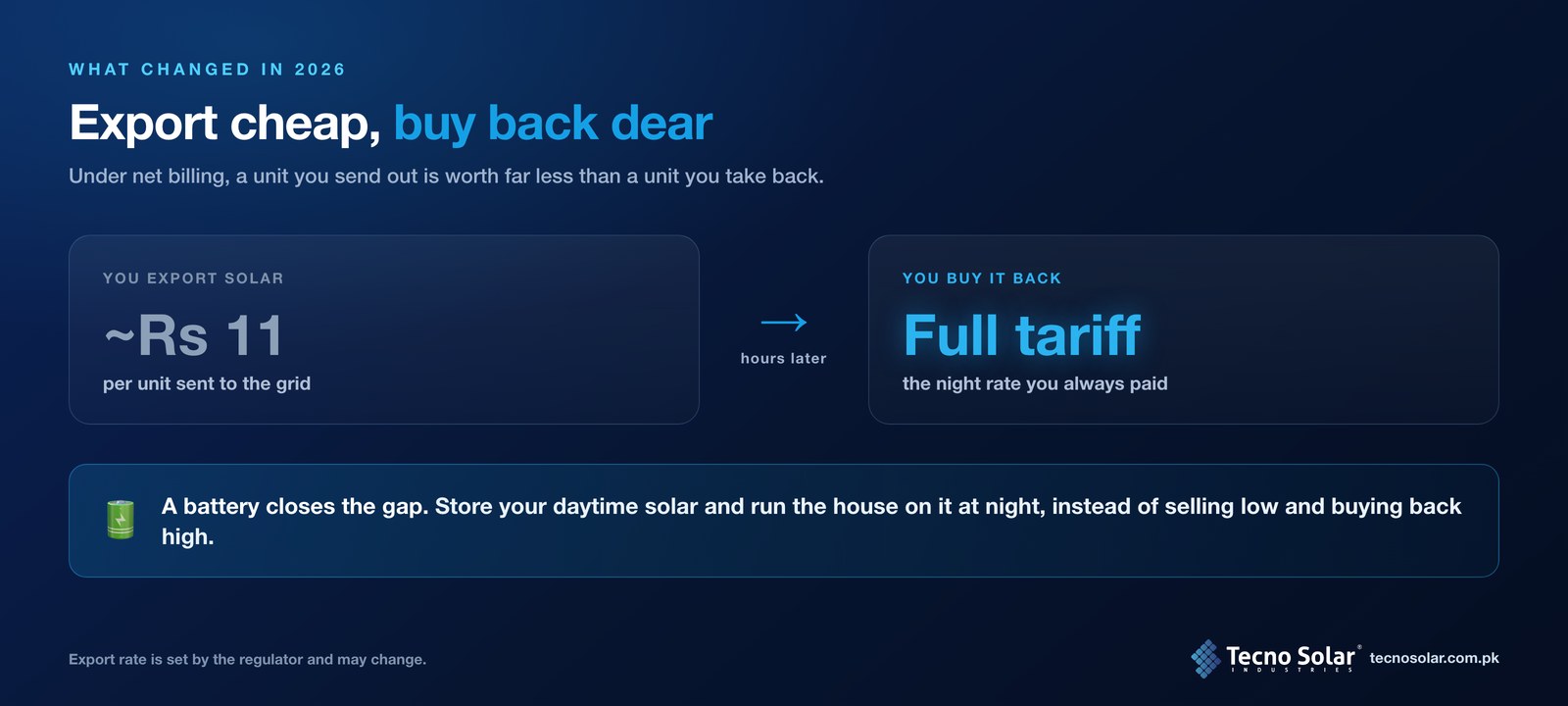
Short version: under net metering a spare unit was worth a full unit. Under net billing, a unit you export is worth far less than a unit you buy back after sunset.
What changed in 2026
In February 2026 the government moved new rooftop solar connections from net metering to net billing. The headline is the price gap: surplus units exported to the grid now pay in the region of Rs 11 a unit, instead of the low-to-mid twenties that net metering effectively returned, while the electricity you import at night still costs you the full tariff.
The exact buy-back rate is set by the regulator and can be revised over time. The direction is what matters: exported solar is now worth much less than the power you buy back.
Why exporting is now a losing deal
Think of it as selling your daytime solar cheap and renting it back expensive a few hours later. Say you export 10 units at midday and earn about Rs 110. The same evening you buy 10 units back at the full tariff, easily Rs 600 or more. You handed the grid your cheapest power and rented it back at the dearest rate.
Under net metering that round trip was close to free. Under net billing it is pure loss, and that loss repeats every single day the sun is up.
Where a battery changes the maths
A battery lets you store your own daytime solar instead of exporting it, then run the house off it in the evening. That one change flips the problem:
- You stop giving units away at Rs 11 and then buying them back at the full rate.
- Your solar now offsets your most expensive hours, the evening peak, instead of your cheapest.
- Load-shedding and voltage dips stop being your problem, because the house is already running on stored power.
This is exactly why interest in storage has jumped since the policy changed. The battery is no longer a luxury add-on; under net billing it is the part that protects your savings.
How much battery backup do you need?
The right size is set by your evening load, the fans, lights, fridge, TV and the odd appliance you run after sunset, not by the size of your panels. As a rough guide:
- Light backup: a smaller 12.8 volt lithium pack for lights, fans and a few essentials.
- Whole home on a hybrid inverter: a 51.2 volt (48 volt) lithium unit, sized to carry the evening through to morning.
The inverter you already own usually decides the voltage. Share your bill and your evening load and we will size it properly rather than guess.
So is battery storage worth it under net billing?
For most homes that use power in the evening, yes. Every evening unit you pull from your own battery is a unit you did not buy at full tariff, and the gap between the Rs 11 export rate and the full retail rate is, in effect, your return. The exact payback depends on your load and tariff, which is why we work it out against your real bill instead of quoting a one-size number.
Solar is still very much worth it in 2026. The value has simply moved, from exporting cheap power to storing and using your own.
The right battery for storage
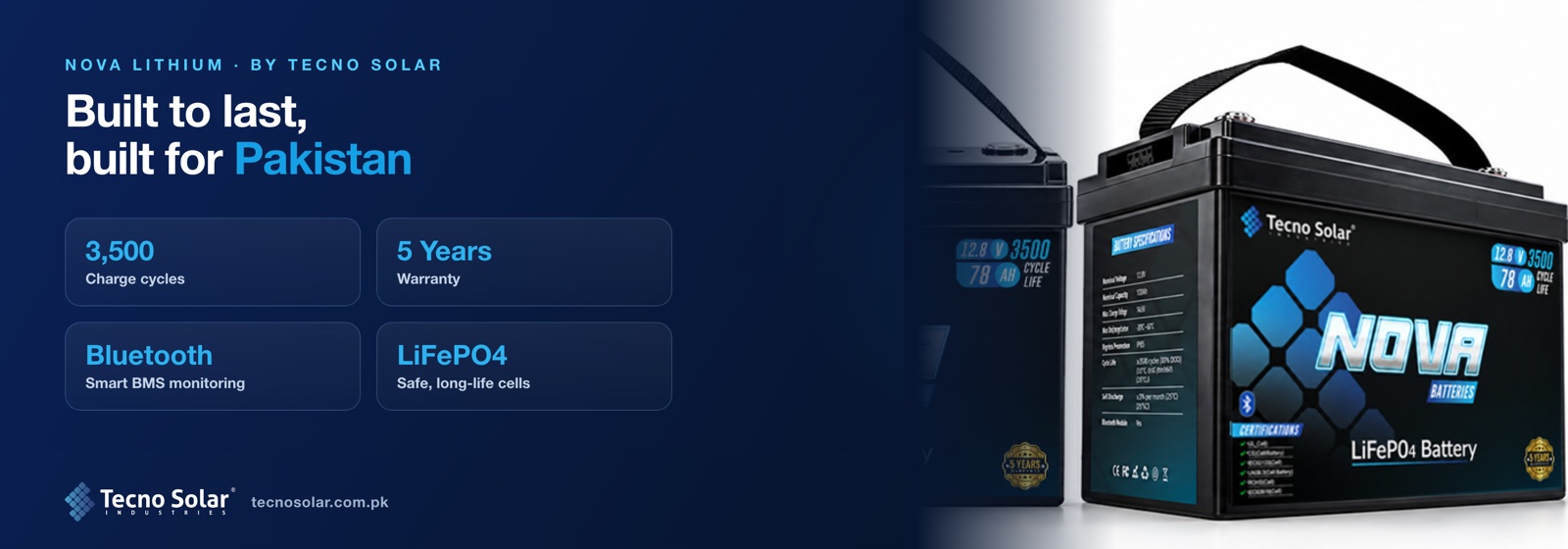
For daily storage you want a battery built to charge and discharge every day for years, which is exactly what lithium (LiFePO4) is for. Tecno Solar builds the NOVA range of lithium batteries for this, from small 12.8 volt packs up to 51.2 volt units for a whole home on a hybrid inverter.
Frequently asked questions
Do I lose net metering if I already have it?
Existing approved net-metering agreements generally continue under their own terms; it is new connections that move to net billing. Confirm your status with your DISCO.
Can I add a battery to a system I already have?
Usually yes, as long as your inverter is hybrid and lithium compatible. Share your inverter model and we will confirm before you spend anything.
Which battery suits net billing best?
A lithium (LiFePO4) battery, because it is built to charge and discharge every day for years. Our NOVA range is designed for exactly this daily-cycling use.
Is solar still worth it under net billing?
Yes, but the smart setup is now solar plus a battery, so you self-consume your power instead of selling it cheap and buying it back dear.
Thinking about adding storage? See the full NOVA lithium range and prices, or send us your bill for a quote and we will size the right battery for your evening load.
Ready to pick the right battery?
See the full NOVA lithium range and prices, or get a quick quote sized to your home.